
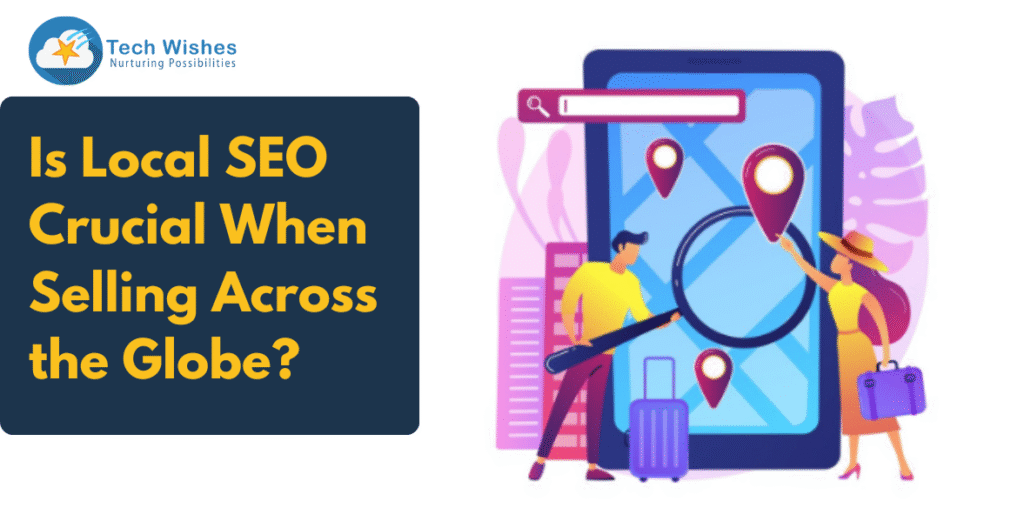
When expanding your brand globally, mastering SEO feels like solving a Rubik’s Cube—with international pages, multiple currencies, languages, and SEO strategies. So many decisions: should you optimise every region locally? Or focus on global SEO and skip localisation?
At Tech Wishes, our SEO experts have crafted SEO strategies for brands across markets and niches. The answer is nuanced: yes, local SEO remains essential, even when selling worldwide—but only when aligned with your business model, audiences, and growth plans.
Understanding Global vs Local SEO
- Global SEO focuses on reaching users across countries and languages—targeting broad search intent like “eco products online” or “Shopify development services.”
- Local SEO zeroes in on specific regions—helping businesses appear in Local Packs, Maps, voice searches, and nearby searches based on location. Think queries like “web design agency near Mumbai” or “D2C branding specialist in Delhi”
Local SEO includes optimising Google Business Profiles (GBP), consistent citations (NAP), local backlinks, region-specific pages, and user reviews—all signals of trust and relevance in particular geographies
Why Local SEO Still Matters—Even Globally
- Boosts Visibility in Target Markets
Customers often search within their region: e.g., “inventory marketing agency near me.” A local SEO approach helps you appear in Google Maps, local pack, and localised organic results—so users find you first, not your competitors
- Builds Credibility Through Local Signals
Reviews, local listings, and consistent NAP across directories reinforce trust. According to studies, 93% of consumers are influenced by online reviews when selecting businesses. A verified GBP with accurate address, photos, and positive ratings boosts trust dramatically.
- Improved Conversion & Relevance
Local searches are high-intent: 76% of mobile users visit within 24 hours after a local search, and 28% convert to sales afterwards. Localisation drives better conversion rates by matching searcher intent precisely.
- Competitive Edge Locally
While global SEO helps scale presence, local SEO helps you outrank regional and bigger players in target cities. 94% of high-performing brands have local marketing strategies in place.
- Voice & Mobile Trends Demand Localisation
Voice queries like “where can I find a web developer in [city]?” are rising—especially on mobile. Local SEO optimised content helps you capture these micro-moment searches with local keywords and natural language match.
When Local SEO Might Not Be Necessary
- Pure Global Products Without Local Presence
If you sell digital products accessible universally (e‑books or SaaS) with no physical offices or service areas, heavy local SEO efforts may not be necessary—global content, multilingual targeting, and hreflang tags matter more.
- You Can’t Sustain Multiple Local Listings or Pages
Maintaining GBP, citations, and review responses for dozens of regions without local teams or resources can create inconsistencies. Google values consistency—incorrect NAP can harm rankings
How Do You Implement Local SEO at Scale?
Strategy: Glocalisation – think globally, act locally. Here’s how:
🔹 Google Business Profile (GBP)
Set up GBP for each location if you have physical offices, even if they’re satellite hubs. Keep NAP consistent, post updates regularly, and respond to reviews
🔹 Citations & Local Listings
List your business on trusted directories and niche platforms specific to the region (Yelp, Foursquare, local business circles). Tools like BrightLocal or Moz Local can help manage consistency.
🔹 Create Local Pages or Sections
Craft region-specific service pages or microsites with relevant currency, local testimonials, blogs (audience pain points, local news), and contact info. Use schema markup (LocalBusiness) to provide search engines with location context.
🔹 Content Localisation (Not Just Translation)
Perform keyword research per market in native language and context—not literal translations. Use localised language patterns and search behaviour insights per region.
🔹 Use Country-Specific Domains or Subdirectories
Consider ccTLDs (e.g., .us, .ae, .co, .uk) to build local credibility, trust, and potentially rank higher regionally. Google treats ccTLDs as strong geographic signals.
Measuring the ROI of Local SEO Investments
Metrics to Track
- Local Pack Impressions & Clicks from GBP insights
- Call volumes, direction requests via GBP
- Rankings for region-based keywords
- Traffic and conversions from geo-specific pages
- Review volumes and average ratings
ROI Impact: Localised pages combined with GBP optimisation can boost organic/local traffic, leading to increased form fills, calls, or sales specific to targeted cities. These metrics help attribute performance properly.
Does Local SEO Help Global Visibility Too?
Yes—by improving brand authority and website structure, you also strengthen your global SEO profile. Local backlinks, consistent site signals, and high-quality content contribute to overall domain strength and relevance in broader markets.
When to Skip Local SEO
- You strictly sell digital services remotely with no local support relevant
- You lack the resources to maintain listings/reviews for multiple geos
- The quantity of locations is massive (hundreds), and localisation isn’t scalable
Final Decision Guide
Before deciding:
- Do you have a local presence? Offices, service hubs, or fulfilment centres?
- Are your clients primarily from certain regions?
- Can you manage local listings and pages consistently?
- Do you have resources to handle multilingual, localised SEO?
If yes to any, Local SEO is a strategic differentiator—even while scaling globally.
How Tech Wishes Helps You With Local-Global SEO Balance
At Tech Wishes, we build:
- Geo-targeted SEO strategy aligned with user intent and business reach
- Local page structures and GBP setup for multiple markets
- Language and currency-aware landing pages with hreflang tagging
- Citation management and review generation workflows
- Content localisation tied to regional audience insights
This helps brands sell globally without losing regional relevancy.
Final Thought
Yes—local SEO remains crucial even when operating globally, especially for service or product brands with regional presence or audience breakdowns. A “glocal” approach ensures you’re visible, credible, and converting—both globally and locally.
Want guidance on crafting a tailored global-local SEO roadmap?
Contact Tech Wishes for a strategy session today.