
In today’s competitive e-commerce landscape, mobile app development isn’t just a luxury—it’s quickly becoming a necessity. For e-commerce brands, a well-designed and maintained mobile app can unlock powerful returns: higher customer retention, improved conversion rates, stronger lifetime value, and better brand loyalty. At Tech Wishes, where we build custom mobile apps for brands, we often see these benefits firsthand.
In this article, we’ll explore how to measure the ROI of mobile apps, what components influence return on investment, real‐world stats, and how e-commerce brands can maximize value from their app investment.
What is ROI in Mobile App Development?
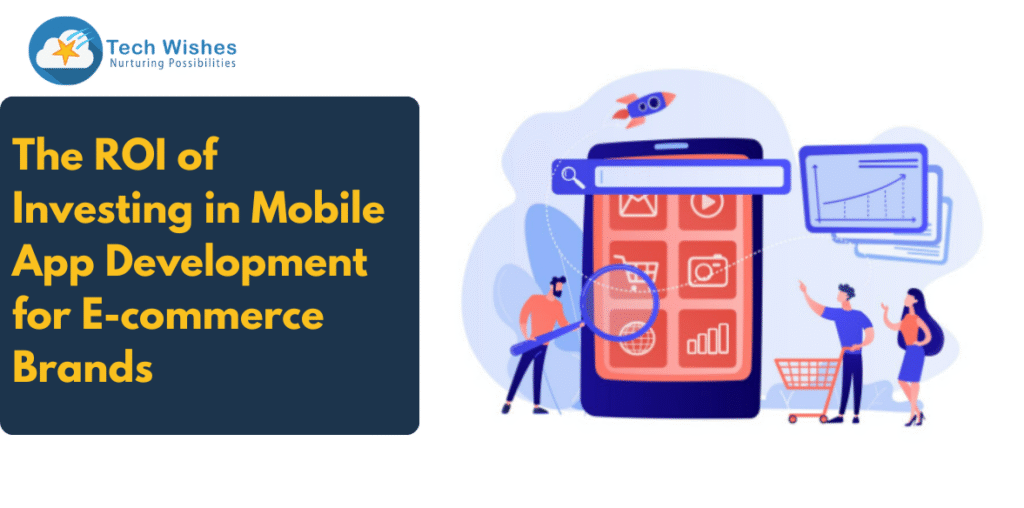
Return on Investment (ROI) in the context of mobile app development for e-commerce brands refers to the financial gains (and strategic benefits) compared to the costs incurred in building, launching, and maintaining the app.
Key metrics involved:
- Cost: upfront development, UI/UX, backend APIs, integrations (payment gateway, inventory), platform (iOS / Android / cross-platform), testing, launch, ongoing maintenance and updates
- Revenue/Value: increased sales, higher average order value (AOV), repeat purchases, reduced cart abandonment, improved conversion rates, subscription fees (if applicable), cost savings in marketing/customer service
- Time-frame: many apps begin showing meaningful ROI in 6-9 months for e-commerce brands, though full benefits often accumulate over 12-24 months.
Why Mobile App Helps E-commerce: Key Drivers of ROI
Here are the main levers through which mobile apps drive return for e-commerce brands:
- Higher conversion rates. Apps tend to convert better than mobile websites due to saved credentials, streamlined checkout, optimized performance, offline support, etc. Brands often see 2-4× higher conversion in app vs mobile web. Push notifications, loyalty features, and personalisation further boost conversions.
- Improved customer retention & lifetime value (CLV). Customers using apps tend to shop more often and are more loyal. They are easier to re-engage via push notifications or in-app offers. This raises customer lifetime value, which is crucial to making app investment worthwhile.
- Reduced acquisition & marketing cost per sale. Once your app is installed, re-engaging users (push, in-app messaging) is cheaper than continuous ad spend. Also, apps help reduce cart abandonment and improve repeat purchase rates. The cost to maintain & engage often pays off versus continuous paid acquisition.
- Better analytics & personalisation Apps give you more precise data on user behaviour, product interest, funnels, and drop-off points. That lets you optimise UX, personalize recommendations, improve search and navigation, etc.—which all feed back into improved sales.
- Brand presence & trust. Having an app boosts brand recall (icon on user’s phone), gives perception of stability and commitment. It can differentiate itself from competitors that rely only on websites. This intangible benefit has value in long-term customer relationships.
Costs & Factors Affecting ROI
Knowing what you’ll invest is as important as knowing what you can earn. Here are cost components & variables that impact ROI:
- Development Costs: depending on complexity. Basic apps may cost tens of thousands (USD) or in local currency equivalents; more complex features (inventory sync, multi-region, real-time updates, AR/VR) raise costs significantly.
- Platform Choice: native iOS & Android vs cross-platform (React Native, Flutter). Cross-platform can reduce cost and time, but may trade off performance.
- UI/UX & Feature Set: better UX, smoother checkout, personalization, search, offline support, etc., add cost but also drive conversion & retention.
- Maintenance & Updates: OS updates, security, bug fixes, evolving UX; often 15-25% (or more) of initial cost per year.
- User Acquisition & Marketing: app store optimisation (ASO), launching, promoting app installs, push notification campaigns, etc.
Real-World ROI Benchmarks & Statistics
- E-commerce brands often achieve 10× ROI (or higher) when a portion of their most engaged customers use the app and retention is good.
- In some case studies, apps experience 4-10× higher conversion rates than mobile sites.
- Brands using apps report 20%+ revenue increases after app launch, especially once retention & repeat purchases kick in.
- Cost-vs-investment examples: apps that cost relatively modest amounts (or use no-code / managed platforms) can generate strong returns through recovered cart abandonment, push notifications, loyalty programs.
How to Maximise ROI: Best Practices
To ensure your mobile app investment pays off, here are strategies Tech Wishes recommends:
| Strategy | Why It Matters |
| Build an MVP first | Launch core functionality quickly to test/learn; then iterate. Avoid excessive initial spend on features nobody uses. |
| Focus on UX & Speed | Slow apps or clunky checkout lead to drop-offs. Faster load time improves conversion. |
| Enable personalisation & loyalty. | Recommender systems, in-app offers, and loyalty programs help boost repeat purchases. |
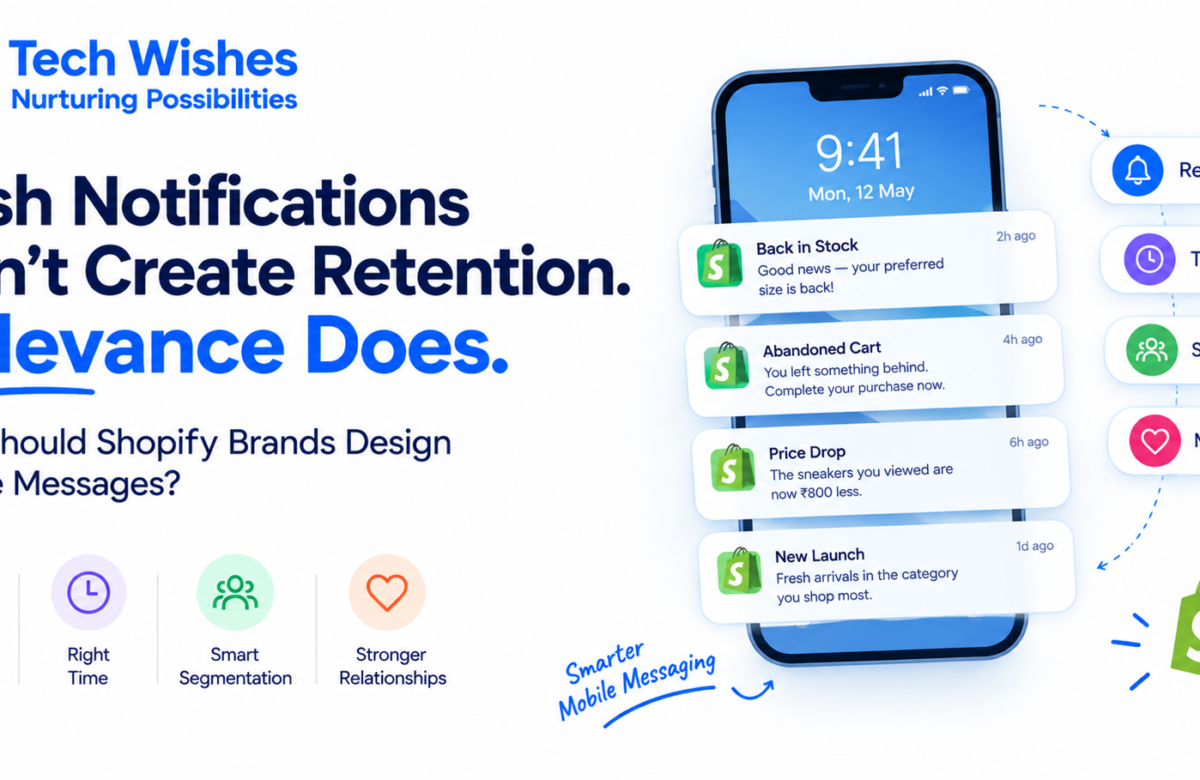
| Use push notifications & retention features | These cost very little per user but can significantly increase engagement. |
| Measure metrics rigorously | Track CAC (Customer Acquisition Cost), CLV, conversion rates, retention, AOV, and cart abandonment. Have analytics from day one. |
| Ongoing maintenance & updates | Bug fixes, security, new OS versions, user feedback—neglected updates can degrade UX & reduce retention. |
| Marketing your app | Getting installs is one thing; driving usage is another. Strategies like incentives for first purchase, referral codes, and social sharing help. |
What ROI Timeline Should You Expect?
- Initial returns often begin 6-9 months after launch for e-commerce apps with solid UX and engagement.
- Full ROI (meaning strong CLV, positive cash flows, marketing payoffs) often materializes over 12-24 months, especially for brands starting from scratch.
- Apps with better retention, frequent purchases (beauty, fashion, FMCG) tend to see faster ROI; low-frequency purchases (high ticket, durable goods) take longer.
How Tech Wishes Helps Brands Realise High ROI
At Tech Wishes, we guide e-commerce brands from concept to growth, ensuring the app you build is designed for returns. Here’s how:
- Deep UX research to reduce friction and optimise conversion
- Modular architectures that allow easy feature additions & updates
- Integration of push notification & loyalty/referral systems
- Strong analytics dashboards for CAC, LTV, and retention tracking
- Cross-platform solutions (if appropriate) to save cost and maintenance
- Ongoing support & iteration (we’re not done at launch)
Conclusion
Investing in mobile app development for your e-commerce brand can offer substantial ROI—higher conversion, stronger retention, greater lifetime value, and better brand equity. However, to unlock those returns, you must plan carefully: control costs, emphasize UX, market the app smartly, and track the right metrics.
If you’re considering building or improving your app, Tech Wishes is here to help. Together, we can design an app that not only looks great but delivers tangible returns—because in the end, ROI is what matters.