Stop Burning Ad Spend On A Catalog That’s Out of Date
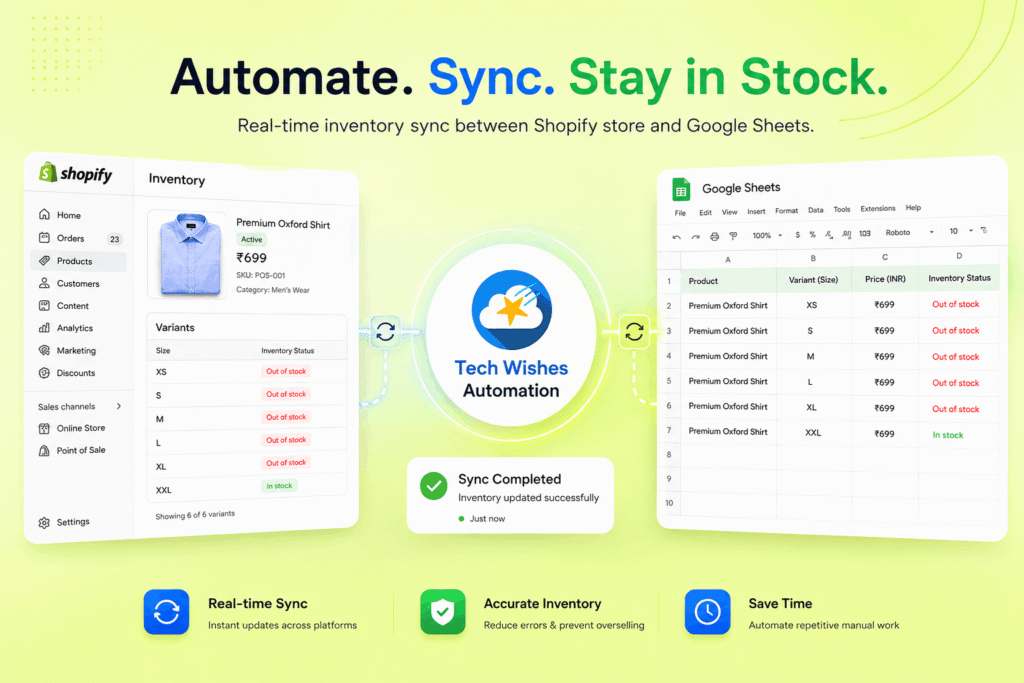
Keep Meta Commerce Manager perfectly synced, cut wasted clicks on dead stock, and route traffic to strategically grow your whole store — not just one product page.
Real-time feed generationBuilt for real Shopify inventory logicpin-to-collection routingNo more selling sold-out stockYour feed never goes staleNo more selling sold-out stockReal-time feed generationBuilt for real Shopify inventory logicpin-to-collection routingNo more selling sold-out stockYour feed never goes staleNo more selling sold-out stock
THE PROBLEM
Wasted Clicks & Missed Opportunities
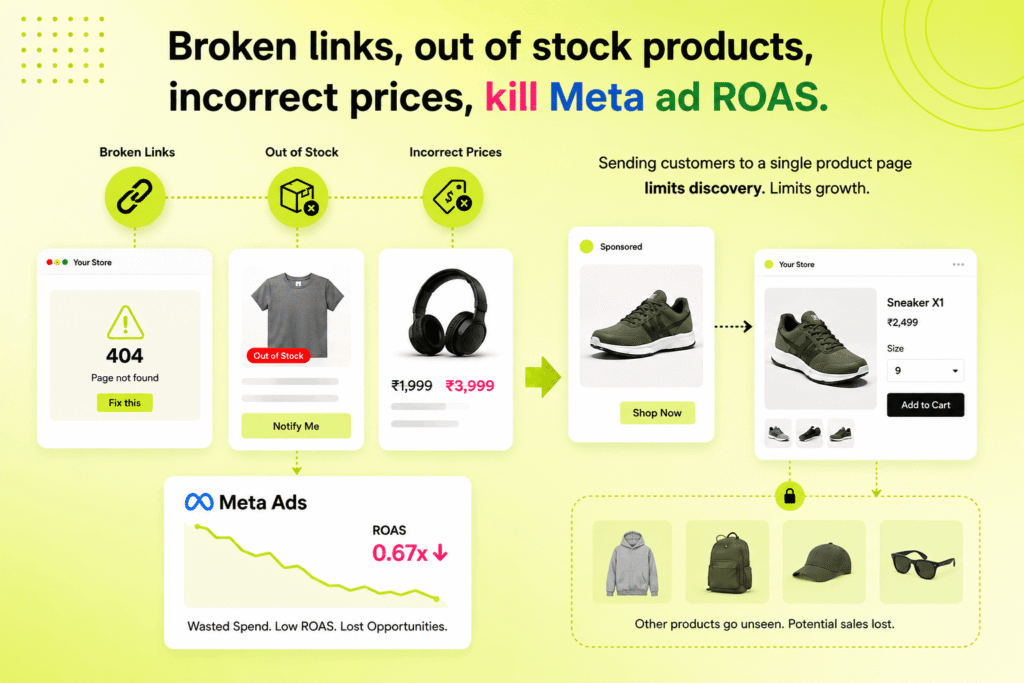
Are you tired of burning money on Meta ads because your product feed is outdated? Sending paid traffic to out-of-stock products, incorrect prices, or dead links is a surefire way to kill your ROAS. Sending users to a single product page also limits their journey — they bounce without discovering the rest of your catalog.
THE Solution
Smart Catalog Automation
Our automation tool bridges your real business logic and Meta Commerce Manager, so your data is always accurate and your traffic is routed for maximum conversion — no manual feed babysitting required.
Generates a dynamic, downloadable feed link for Meta Commerce Manager. Auto-updates inventory, pricing, and details so ads always reflect reality.
02 / Spend
Eliminate wasted spend
Keeps your Meta catalog fully up to date, so you never spend another cent advertising products your customers can’t actually buy.
03 / Routing
Real-time data feeds
Instead of sending clicks straight to a narrow product page, this pins the advertised product at the top of a relevant collection page.
Case Study
From Wasted Ad Spend to a Catalog That Sells Itself
THE CHALLENGE
A fast-moving Shopify menswear brand was managing 2,000+ SKUs across shirts, kurtas, trousers, and co-ords — each with multiple size and color variants. Their Meta catalog was updated manually, which meant two recurring problems: ads kept running on products that were technically “in stock” on Shopify but functionally unsellable (only 1 of 8 sizes left), and every ad click landed on a single product page with no path back into the wider catalog.
Solution -1
Real inventory logic, not just a stock count
Instead of trusting Shopify’s raw “in stock” flag, we built a variant-aware threshold: a product is only marked in stock in the Meta feed if 75% or more of its variants actually have inventory. This runs on every sync cycle (every 2 hours), so the feed reflects real sellability, not a binary flag.
Solution -2
"pin to collection" link routing
Rather than sending every ad click straight to a single product page, we built a priority-based link resolver for the feed’s link field:
Match the product’s tags against a curated tag → collection map (e.g. a tagged kurta routes to /collections/kurtas)
If no tag match, fall back to the product’s first Shopify collection
If no collection exists at all, fall back to the direct product page
Each URL is appended with a ?pin=<product-handle>
parameter, so the exact product that triggered the click surfaces at the top of the collection — shoppers still see what they clicked, but land inside a full category instead of a dead end.
The OUTCOME
Ad spend automatically routes away from functionally out-of-stock variants instead of a human catching it after the fact
Every ad click becomes a browsing session across a full collection, not a single-product bounce
Feed updates run unattended on a 2-hour cycle with atomic writes, so Meta’s crawler never reads a half-written file
Why this is a game-changer
The shopper still finds the product they clicked on — but now they’re exposed to your wider catalog too. That’s what lifts cross-sells, bumps up average order value, and gives the rest of your products the visibility they deserve.