
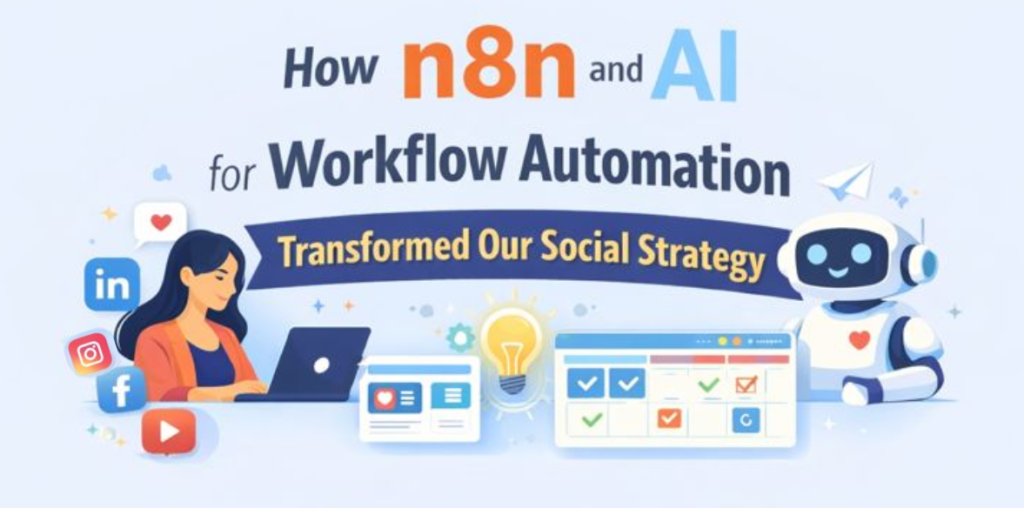
In the modern digital landscape, “content is king,” but consistency is the kingdom. Yet, for most teams, the “clerical weight” of maintaining that kingdom is what leads to burnout. You have a great idea, but between that spark and a live post on four different platforms lies a gauntlet of resizing images, tweaking captions for different audiences, and managing a dozen open browser tabs.
We recently set out to see if we could solve this not just with a better schedule, but with a more intelligent system. By building a custom ai workflow automation, we’ve moved away from manual distribution and toward a model where creativity and execution are perfectly synced.
Beyond the Simple Trigger
Most people think of an automation tool as a simple “if this, then that” bridge. But to handle the nuances of a brand, you need something deeper. Our approach uses a central “brain” that doesn’t just push data—it understands context.
Before a single word is written, the system checks against internal brand guidelines and historical preferences. This ensures that the output isn’t just “generic AI,” but a reflection of a specific voice. It’s the difference between a bot that babbles and a system that represents.
The Synergy of Language and Vision
One of the most exciting shifts in ai for workflow automation is the ability to connect different types of intelligence. In our current setup:
- One layer of the engine focuses on the “narrative”—crafting captions that respect the professional tone of LinkedIn while leaning into the visual-first energy of Instagram.
- Simultaneously, a visual engine interprets the core topic to generate high-fidelity, custom assets.
By the time the process is finished, the “creative package” is complete, tailored, and ready for the world without a human ever having to click “download” or “upload.”
Navigating the Multi-Platform Maze
The real magic happens in the “handshake.” Posting to a YouTube channel involves a completely different technical logic than posting to a Facebook Page or an Instagram Business account.
Instead of treating these as separate chores, we use a unified ai automation platform to act as an air traffic controller. The system handles the complex API negotiations in the background, ensuring that a video ends up on YouTube and a high-res image lands on LinkedIn, each with its metadata perfectly intact.
Why This Matters for the Creative Mind
The goal of using high-level workflow automation tools isn’t to remove the human from the loop; it’s to return the human to their actual job. When you remove the 45 minutes of “platform shuffling” that follows every creative idea, you give your team the space to think bigger.
We’ve found that when the execution is guaranteed, the quality of the ideas actually improves. You stop worrying about how to post and start focusing on what is worth saying.
Reflection
This transition from manual work to an orchestrated engine has fundamentally changed our output. We are no longer just “using tools”; we are building systems that allow our ideas to travel further and faster than before.
Would you like to explore how these types of internal engines could be adapted for other areas of your business, like automated reporting or internal knowledge management?