
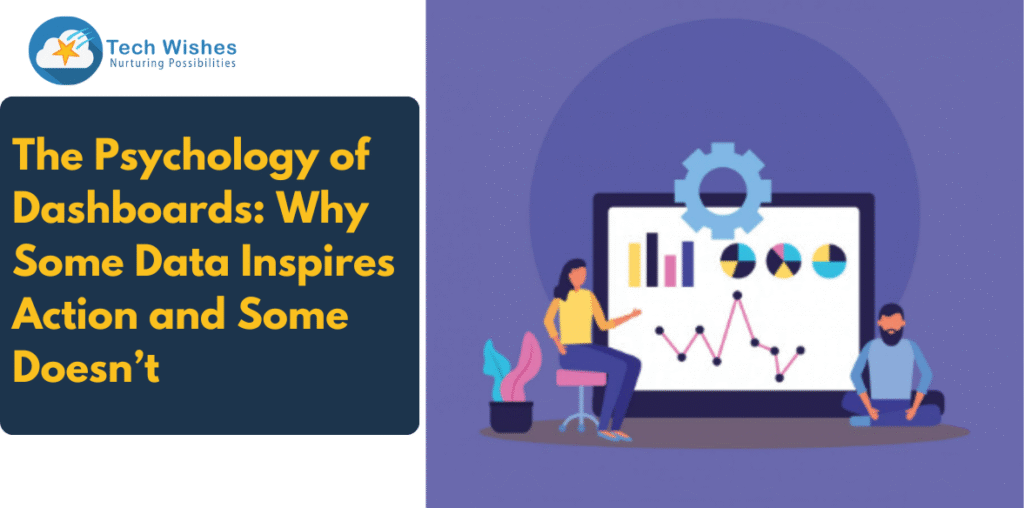
In today’s digital-first business environment, dashboards have become the nerve centre of decision-making. Whether it’s SEO analytics, eCommerce performance tracking, or website development KPIs, dashboards transform raw data into visual insights.
But here’s the catch: not all dashboards drive action. Some inspire quick, informed decisions, while others overwhelm teams with cluttered visuals, complex charts, or irrelevant metrics. The difference lies in the psychology of dashboard design—how data is presented, interpreted, and acted upon.
At Tech Wishes, a leading website development company, we’ve built dashboards for eCommerce brands, startups, and enterprises. And we’ve seen firsthand that successful dashboards aren’t just about data—they’re about human psychology.
Why Businesses Need Actionable Dashboards
For businesses investing in eCommerce website development or digital transformation, dashboards are the bridge between performance and growth. They:
- Provide real-time visibility into business metrics.
- Highlight trends and risks before they escalate.
- Help teams align with KPIs and business goals.
- Enable leadership to make data-driven decisions.
But when dashboards fail to inspire action, businesses risk “data fatigue”—where endless numbers are available but none spark meaningful change.
The Psychology Behind Actionable Dashboards
To design dashboards that drive results, it’s important to understand the psychological principles that influence how people process information.
1. Clarity Reduces Cognitive Load
When dashboards are cluttered with dozens of metrics, users feel overwhelmed. The human brain has a limited capacity for processing information at once. That’s why simple, focused dashboards are more effective.
Businesses should highlight 5–7 key KPIs per view, not 50. For example, an SEO dashboard might focus on:
- Keyword rankings
- Organic traffic trends
- Conversion rates
- Bounce rates
- Backlink growth
Clarity ensures faster understanding and quicker decisions.
2. Relevance Drives Engagement
People pay attention to data that impacts their role directly. A sales manager doesn’t need to see technical SEO crawl errors, just as a web developer doesn’t need cart abandonment rates.
Role-specific dashboards ensure relevance, making users more engaged and proactive.
3. Visual Hierarchy Shapes Perception
Our eyes are drawn to larger, colourful, or highlighted visuals first. Dashboards that use colour psychology (green for growth, red for risks) and logical hierarchy guide users toward what matters most.
For example:
- A spike in traffic should be highlighted in green.
- A drop in conversions should trigger a red alert.
This visual prioritisation ensures businesses act on the most urgent insights.
4. Storytelling Inspires Action
Data in isolation can be meaningless. Dashboards that tell a story—connecting cause and effect—drive more action.
For instance, if your SEO dashboard shows a drop in rankings, but also highlights a decrease in backlinks, the narrative is clear: improving backlinks can help rankings recover.
Storytelling turns data from numbers into a strategic direction.
Common Mistakes Businesses Make with Dashboards
Even the best web development company can build a dashboard, but without applying psychology, businesses fall into these traps:
- Too much data, not enough focus → Decision paralysis.
- One-size-fits-all dashboards → Teams disengage from irrelevant metrics.
- Overly complex visuals → Pretty but confusing graphs slow decisions.
- Lack of context → Numbers without benchmarks or goals lose meaning.
These mistakes make dashboards look impressive but deliver little value.
How Businesses Can Create Actionable Dashboards
At Tech Wishes, we help businesses design dashboards that aren’t just visually appealing but truly decision-oriented. Here’s how:
- Define Business Goals First
Dashboards should be built backwards from your objectives. For example, an eCommerce business aiming to increase revenue should track cart recovery, product views, and average order value—not vanity metrics. - Segment by Roles
Leadership, marketing, sales, and development teams need different dashboards. Segmentation ensures every team acts on the data relevant to them. - Apply Visual Psychology
Use colours, contrast, and visual hierarchy to guide attention. Red for urgent issues, green for positive performance, and yellow for warning signals. - Integrate Automation
Automated dashboards update in real time, reducing the need for manual reporting. For SEO, automation ensures keyword trends and ranking shifts are visible instantly. - Tell a Clear Story
Instead of random data points, dashboards should explain: What’s happening? Why is it happening? What action should be taken?
Actionable SEO Dashboard
Imagine two businesses investing in SEO automation.
- Business A: Their dashboard shows 40+ metrics, including minor crawl errors and long-tail keyword performance. The team feels lost, unsure where to focus.
- Business B: Their dashboard highlights only 6 KPIs: rankings, organic traffic, conversions, bounce rates, top landing pages, and backlink growth. Colour-coded signals highlight urgent drops.
Business B acts faster, prioritises better, and achieves faster rankings—all because their dashboard was designed with psychology in mind.
The Business Case for Smarter Dashboards
When dashboards inspire action, businesses unlock:
- Faster decision-making → because insights are clear and prioritised.
- Improved efficiency → teams focus on what matters most.
- Higher ROI → data leads directly to business outcomes.
- Stronger alignment → dashboards keep every team moving toward shared goals.
This is why choosing the best website development company is critical—not just for building dashboards, but for designing them with business psychology in mind.
Final Thoughts
Dashboards are more than just screens full of charts—they’re decision-making engines. The difference between data that inspires action and data that doesn’t lies in clarity, relevance, and psychological design.
At Tech Wishes, we specialise in creating dashboards that combine automation, SEO insights, and smart web development with human-centred design. The result? Dashboards that don’t just show numbers but drive growth.
If your business is drowning in data but starving for action, it’s time to rethink your dashboards. Let Tech Wishes help you transform your data into decisions.