
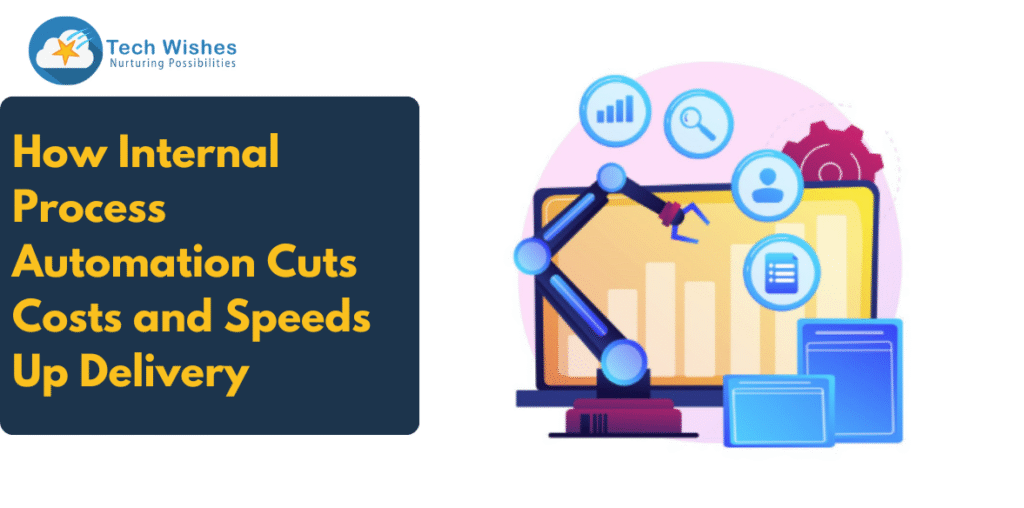
Running a business today is like juggling flaming torches while balancing on a tightrope — there’s a lot to handle, and one slip can cost you time, money, and customers. One of the smartest ways businesses are staying ahead is by implementing internal process automation.
From reducing manual errors to speeding up operations, automation is no longer a “nice-to-have” — it’s a competitive advantage that can slash operational costs and deliver products or services faster than ever.
In this guide, we’ll explore how internal process automation works, why it matters, and how it directly impacts cost savings and delivery speed.
What is Internal Process Automation?
Internal process automation is the use of technology — like AI, workflow tools, and integrated software systems — to handle repetitive, rule-based business processes without human intervention.
Examples of internal processes you can automate:
- Data entry and reporting
- Order processing and approvals
- Employee onboarding
- Inventory management
- Customer service ticket routing
- Invoicing and payments
Instead of your team spending hours on manual, repetitive work, automation tools handle it instantly — freeing people to focus on decision-making and high-value tasks.
How Internal Process Automation Cuts Costs
1. Reduces Manual Labour Costs
When repetitive tasks are automated, you need fewer human hours to complete them. That means your team can either handle more work without hiring extra staff or shift focus to revenue-generating activities.
Example: A retail company that automates invoice processing can cut admin hours by up to 60%.
- Minimises Human Errors
Manual processes are prone to mistakes — and fixing errors costs both money and reputation. Automated workflows ensure accuracy every time.
Voice Search Tip: People often ask, “How can automation reduce errors in business processes?” — the answer: automation follows predefined rules and workflows, eliminating guesswork.
- Streamlines Resource Allocation
When you automate internal processes, you get real-time insights into where your resources are going. This helps you cut waste and optimise efficiency.
- Lowers Overhead Costs
Automation reduces the need for paper, printing, manual filing systems, and physical storage — all of which add up to significant savings over time.
Also Read: What are the top 10 Automation tools that you need as a Digital Marketing expert?
How Internal Process Automation Speeds Up Delivery
1. Faster Decision-Making
When approvals, reporting, and alerts are automated, managers get the data they need instantly. That means faster approvals, quicker problem-solving, and no bottlenecks.
- Real-Time Tracking
Automation tools allow for live tracking of orders, shipments, and project status. Customers and teams always know where things stand, cutting down on follow-up emails and delays.
- 24/7 Operation
Unlike humans, automated systems work around the clock. Processes like order confirmation, stock updates, or ticket routing happen instantly, even outside business hours.
- Shorter Fulfilment Cycles
Automated workflows reduce the back-and-forth between departments, which means orders, projects, or services move from one stage to the next without delays.
Tools That Make Internal Process Automation Easier
- Zapier / Make (Integromat): Connects apps and automates workflows without coding.
- Power BI: Automates reporting and data analysis.
- Shopify Flow: For e-commerce order, customer, and inventory automation.
- Asana / Monday.com: Automates task assignments and project tracking.
- HubSpot / ActiveCampaign: Automates marketing and customer engagement workflows.
Getting Started with Internal Process Automation
- Identify Repetitive Tasks – Look for processes that take a lot of time but have predictable steps.
- Choose the Right Tools – Select automation software that integrates with your current systems.
- Start Small – Automate one process at a time to avoid overwhelming your team.
- Measure Impact – Track time saved, errors reduced, and cost savings.
- Scale Up – Once you see results, roll out automation to other areas.
Real-World Example
A logistics company automated its order processing and delivery scheduling.
Results:
- Processing time dropped from 6 hours to 45 minutes.
- Delivery delays reduced by 35%.
- Labour costs for admin work dropped by 20%.
Final Thoughts
Internal process automation isn’t just about technology — it’s about building a smarter, faster, and more cost-efficient business. Whether you’re running a small team or a large enterprise, automating the right processes can save thousands in operational costs and cut delivery times in half.
If you want to stay competitive, start exploring automation today — because your competitors probably already have.