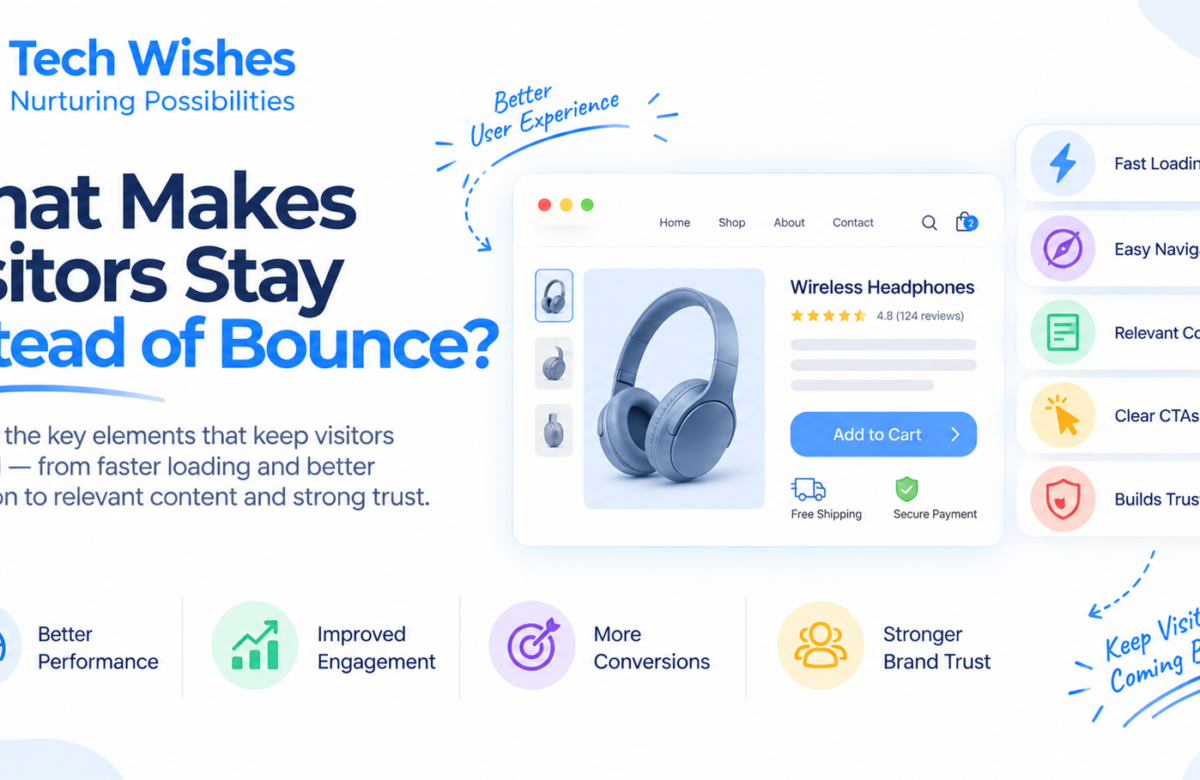

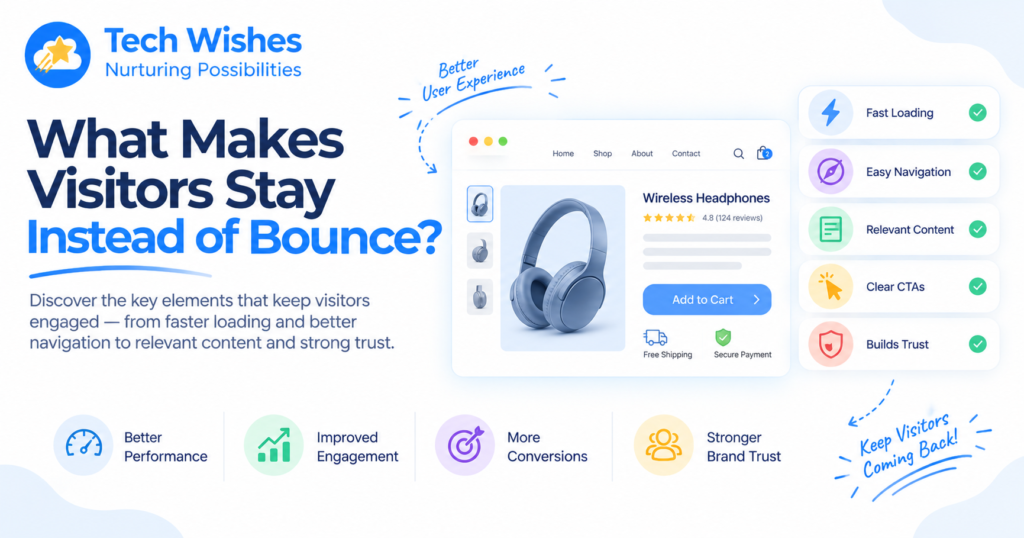
The answer is surprisingly simple: visitors stay when they immediately find what they’re looking for and feel confident exploring further. A fast-loading website, intuitive navigation, engaging content, clear calls to action, and a seamless user experience all work together to reduce bounce rate and increase website engagement. While businesses often focus on attracting more traffic, keeping visitors on the site is just as important. The longer people stay, the more likely they are to trust your brand, explore your products, and eventually become customers.
Getting someone to click is only half the battle.
The real challenge begins after they land on your website.
First Impressions Happen Faster Than You Think
Visitors don’t spend minutes deciding whether to stay. They make that decision in seconds.
When a page takes too long to load, looks cluttered, or doesn’t clearly explain its purpose, people leave without giving it another chance.
On the other hand, websites that quickly answer the visitor’s question create an immediate sense of confidence.
Ask yourself:
“Can someone understand what we do within five seconds?”
If not, improving your messaging may have a bigger impact than increasing your traffic.
Speed Still Wins Every Time
No matter how attractive your website is, people expect it to be fast.
A slow-loading page interrupts momentum and creates frustration before visitors even begin exploring.
Improving website performance isn’t just about technical scores. It directly affects how people experience your brand.
Simple improvements like optimised images, efficient code, reduced unnecessary scripts, and better hosting can significantly improve user engagement.
For ecommerce businesses, every extra second of waiting can mean fewer products viewed and fewer purchases completed.
Your Navigation Should Feel Invisible
The best navigation is the one visitors never have to think about.
People shouldn’t wonder where to click next.
Menus should be simple, product categories should make sense, and important information should always be easy to find.
Whether someone wants pricing, product details, customer support, or your contact page, every additional click creates an opportunity to leave.
Good website design removes friction rather than adding more options.
Content Should Guide, Not Overwhelm
One mistake many websites make is trying to say everything at once.
Visitors rarely read every word on a page.
Instead, they scan.
That’s why effective websites use:
- Clear headings
- Short paragraphs
- Relevant visuals
- Bullet points where appropriate
- Obvious calls to action
Good content feels like a conversation.
It answers questions naturally instead of forcing visitors to search for information.
The easier your content is to consume, the longer users are likely to stay.
Trust Is Built Through Small Details
People don’t buy from websites they don’t trust.
Fortunately, trust isn’t created by one big feature.
It’s built through dozens of small signals.
These include:
- Customer reviews
- Professional design
- Secure checkout
- Clear policies
- Updated content
- Fast-loading pages
- Transparent contact information
- Consistent branding
When visitors feel confident, they’re more willing to continue exploring.
Reducing bounce rate is often about increasing trust rather than adding more marketing messages.
Every Page Should Lead Somewhere
One overlooked reason visitors leave is that they simply don’t know what to do next.
Every page should encourage another action.
That could be:
- Reading another article
- Exploring a product category
- Viewing related services
- Watching a video
- Contacting your team
- Requesting a consultation
A website shouldn’t feel like a collection of isolated pages.
It should feel like a guided journey.
Strong internal linking and thoughtful page structure keep users engaged while helping search engines better understand your content.
Relevance Beats Creativity
Creative headlines and beautiful visuals certainly have their place.
But relevance matters more.
If someone searches for a solution to a problem, they expect the page to immediately address that problem.
Don’t make visitors work to understand your message.
The fastest-growing brands create pages around customer intent rather than internal company language.
That’s one reason SEO and user experience work so well together.
Both focus on delivering the right information at the right time.
Keep Measuring What Visitors Actually Do
Many businesses measure traffic but ignore behaviour.
Analytics can reveal valuable insights such as:
- Which pages have the highest bounce rates
- Where visitors stop scrolling
- Which calls to action receive clicks
- Which pages encourage deeper browsing
These insights often identify opportunities that aren’t obvious during a visual website review.
Improving website engagement is an ongoing process of observing, testing, and refining.
Small improvements made consistently often produce better results than one major redesign.
How Tech Wishes Helps Businesses Build Websites That Engage
At Tech Wishes, we believe a successful website isn’t just one that looks good. It should guide visitors, answer their questions, and make every interaction feel effortless. From Shopify development and performance optimisation to SEO, UX improvements, and conversion-focused design, we help businesses create websites that keep users engaged instead of sending them elsewhere.
Because attracting visitors is important.
Keeping them is what drives real business growth.
FAQs
What usually makes visitors leave a website so quickly?
The biggest reasons include slow loading times, confusing navigation, poor mobile experience, irrelevant content, intrusive pop-ups, and unclear messaging. Visitors leave when they don’t quickly find value.
Can a beautiful website still have a high bounce rate?
Absolutely. Attractive design alone doesn’t keep people engaged. If the content doesn’t match user intent or the website is difficult to navigate, visitors may still leave within seconds.
Does improving website speed really reduce bounce rate?
Yes. Faster websites create a smoother browsing experience, helping visitors access information quickly and encouraging them to explore additional pages.
How important is content in improving website engagement?
Very important. Helpful, well-structured, and easy-to-read content answers visitor questions, builds trust, and naturally encourages people to continue browsing your website.
What’s the first thing businesses should improve to reduce bounce rate?
Start by reviewing your homepage and key landing pages. Make sure they load quickly, clearly explain what your business offers, include strong calls to action, and provide an intuitive path for visitors to continue their journey.