
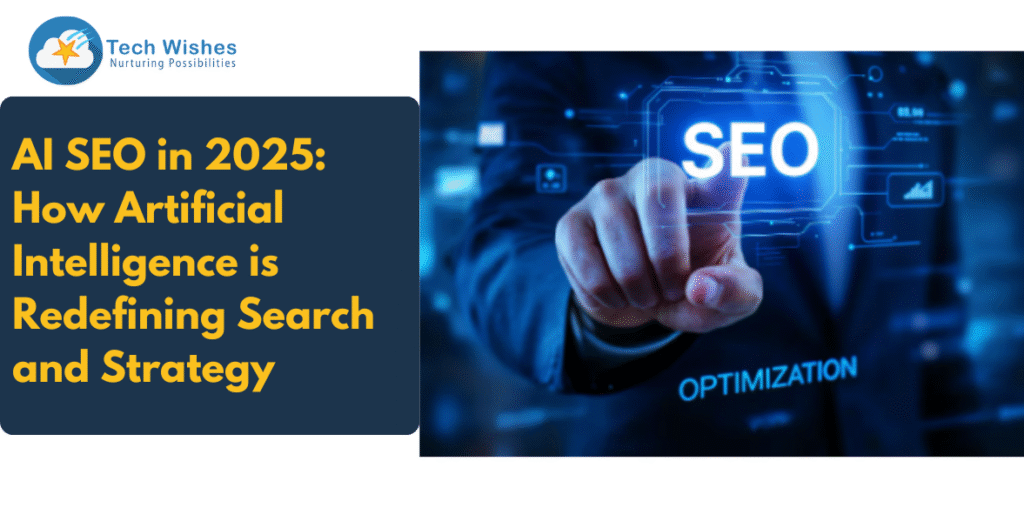
The world of search is changing faster than ever before. For years, businesses optimised their websites around keywords, backlinks, and ranking factors. But in 2025, a new force is reshaping the entire SEO landscape: AI SEO.
AI isn’t just influencing how people search—it’s redefining what search even means. From Google’s AI Overviews to the rise of Answer Engines like ChatGPT and Perplexity, the rules of visibility online have shifted. Brands that fail to adapt risk fading into obscurity, while those that embrace AI SEO can stand out in this new, fractured digital ecosystem.
So, what exactly is AI SEO, and how is it transforming the way businesses should approach search today? Let’s dive into the latest updates, trends, and strategies.
What is AI SEO?
AI SEO, also known as Generative Engine Optimisation (GEO) or Answer Engine Optimisation (AEO), is the practice of optimising digital content so it can be easily found, cited, and trusted by AI-driven search platforms.
Unlike traditional SEO, where the goal is ranking higher on Google’s search results, AI SEO focuses on ensuring that large language models (LLMs) and AI agents—such as Google Gemini, ChatGPT, and Perplexity—use your content when generating answers for users.
In short, AI SEO shifts the target from ranking in search to being part of the answer.
The Rise of AI Overviews
One of the biggest disruptors in 2024–2025 has been Google’s rollout of AI Overviews (formerly Search Generative Experience).
- These overviews use generative AI to compile direct answers from multiple sources.
- On mobile, they often take up to 75% of the screen, dramatically reducing visibility for traditional organic listings.
- This means businesses relying only on traditional rankings are already seeing reduced traffic.
While AI Overviews may seem threatening, they also present an opportunity. If your content is authoritative, structured, and easy for AI to parse, it can be featured inside these summaries, giving you brand exposure even without clicks.
Answer Engines and the Fractured Search Landscape
Google is no longer the only gatekeeper of discovery. Millions of users are turning to answer engines like ChatGPT, Claude, and Perplexity.
Unlike traditional search engines, these platforms don’t show a list of links—they deliver full answers, often citing a handful of trusted sources.
This shift has two big implications:
- Traffic fragmentation – No single platform dominates anymore, meaning your visibility needs to span multiple AI-driven channels.
- Citation-first optimisation – Instead of chasing rank #1, your strategy must ensure that AI platforms cite your content as trustworthy and relevant.
This is where AI SEO becomes essential.
Also Read: Are GEO, LLMO, and AEO Just Buzzwords or the Future of SEO?
E-commerce and AI Shopping Agents
AI’s impact isn’t limited to search results—it’s changing how people shop. Autonomous AI shopping agents are now capable of searching for products, comparing prices, and even completing purchases on behalf of users.
Imagine asking, “Find me a sustainable dinnerware set under $50.” Instead of scrolling through search results, your AI agent will choose and order directly.
For e-commerce brands, this means product descriptions, metadata, and structured content need to be optimised not just for human readers—but also for AI agents who will “decide” what to show or buy.
Key Trends in AI SEO for 2025
Here are the most important shifts every business should know:
1. Generative Engine Optimisation (GEO)
This emerging discipline focuses on making content more AI-readable through:
- Clear, concise answers to questions.
- Structured data and schema markup.
- AI-specific instructions like llms.txt files.
2. Answer Engine Optimisation (AEO)
With AI assistants delivering conversational answers, AEO ensures your brand becomes part of that dialogue. This means writing content in natural, conversational language—similar to how users phrase questions.
3. Zero-Click Future
AI Overviews and answer engines reduce the need to “click through” to websites. Success is no longer only measured in traffic but also in brand presence within AI-generated answers.
4. Tools for AI SEO
Startups like Athena, Profound, and Scrunch AI are building platforms to track how often your site appears in AI answers. Even established players like Wix now offer AI visibility tools that let businesses monitor brand mentions in generative platforms.
5. Trust and Authority
AI platforms rely heavily on authoritative content. Building E-E-A-T (Experience, Expertise, Authoritativeness, and Trustworthiness) remains critical—but it’s now about proving relevance to AI systems as much as to humans.
Practical Steps to Implement AI SEO
- Structure Content for AI
- Use bullet points, FAQs, and schema markup.
- Create content that directly answers questions clearly.
- Write Conversationally
- Align with natural language queries (e.g., “What’s the best…” instead of just “Best SEO tips”).
- Build Credibility
- Include citations, statistics, and references to boost authority.
- Encourage backlinks and mentions to establish your content as “trustworthy” in the AI ecosystem.
- Monitor AI Visibility
- Use emerging tools to see how AI platforms cite your site.
- Adjust content where AI summaries overlook or misinterpret your messaging.
- Diversify Beyond Google
- Optimise for ChatGPT, Perplexity, and other engines.
- Don’t assume Google alone will drive your future traffic.
The Future of SEO: From Search to Discovery
In the next 2–3 years, we’ll likely see a hybrid landscape:
- Traditional SEO will still matter for transactional and local queries.
- AI SEO will dominate for informational, comparative, and conversational searches.
- E-commerce brands must focus on AI agents as much as human consumers.
The businesses that thrive will be those that understand this duality: ranking for people while also optimising for machines.
Why AI SEO Matters Now
AI SEO isn’t a distant concept—it’s the present reality of digital marketing. Google’s AI Overviews, ChatGPT citations, and AI shopping agents are already reshaping consumer behaviour. The days of relying solely on keyword stuffing and backlinks are over.
To succeed in 2025 and beyond, businesses must embrace AI SEO by crafting content that is structured, conversational, and authoritative—content that both humans and machines trust.
Think of AI SEO as not just a technical necessity but a strategic opportunity. Those who adapt early will capture visibility in this new search era, while those who don’t may find themselves left behind.